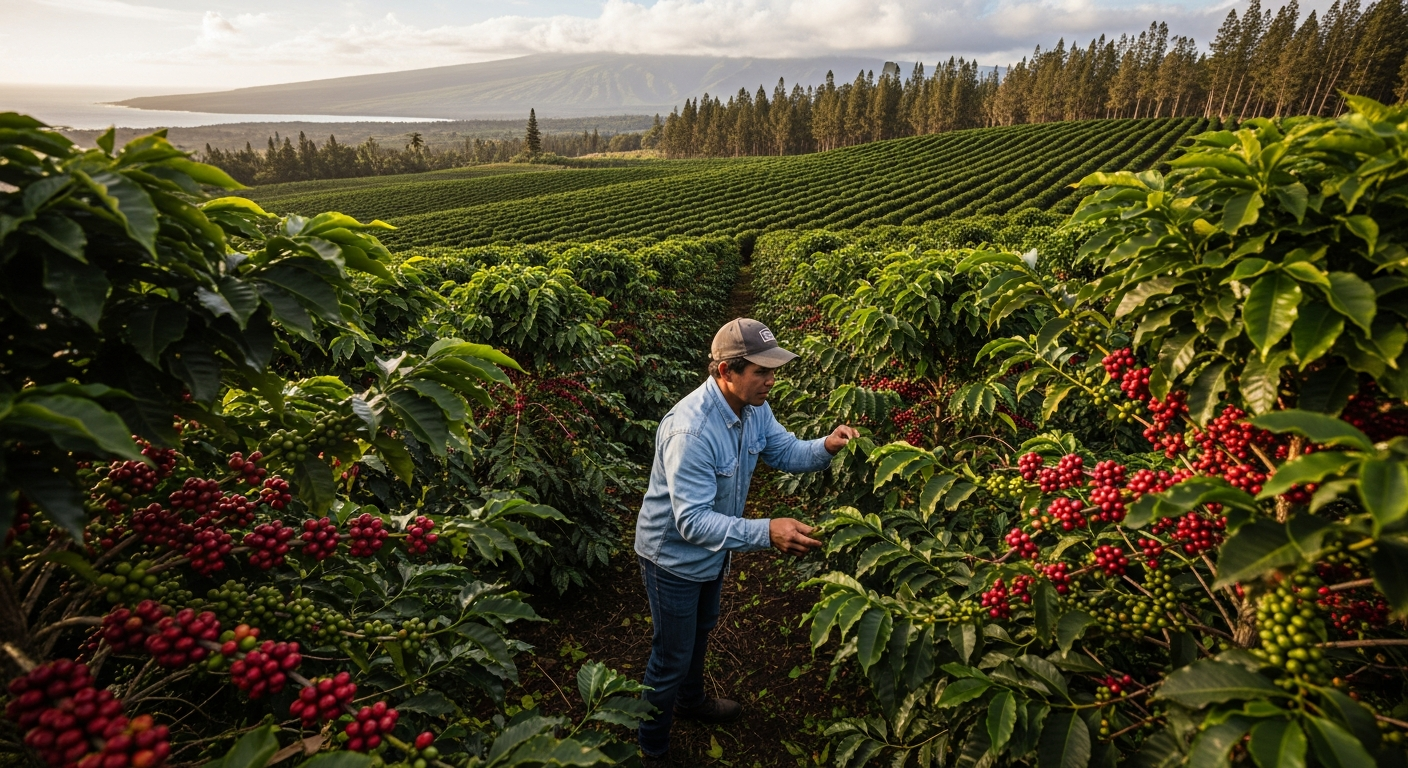
Buying a multi-acre coffee farm in hawaii comes with significant annual holding costs if the land is assessed under standard residential tax rates. Under default county valuation rules, several acres of improved land can incur high yearly property tax bills that strain operating budgets. Securing a hawaii agricultural tax assessment changes those holding economics by valuing the land on its actual agricultural productivity rather than its underlying residential real estate market price.
The Financial Impact of Agricultural Tax Classifications
County tax assessors in hawaii classify property according to its highest and best use. When an acreage parcel carries a general residential or vacant land designation, county tax offices apply standard property tax rates against the full market value of the land. For multi-acre properties, this valuation method generates heavy annual tax obligations regardless of whether the land generates income.
An agricultural dedication reclassifies the cultivated portion of the acreage under dedicated farm use rules. Tax authorities assess dedicated agricultural ground using standardized land-value tables tied to crop productivity rather than recent market sales. A five-acre parcel assessed as working agricultural land can see its taxable land value drop dramatically, resulting in substantial yearly tax savings compared to surrounding residential lots.
Understanding these tax distinctions is vital for anyone reviewing recent hawaii property tax changes across the islands. The tax savings apply directly to the land dedicated to active farming, while any residential dwelling site on the parcel continues to be taxed at standard residential rates.
Active Farming Requirements to Qualify for Assessment
County tax departments enforce strict operational benchmarks before granting or renewing an agricultural tax status. Simply leaving trees on a hillside without active management does not qualify a parcel for reduced tax rates. Property owners must demonstrate genuine, ongoing commercial farming activities on the dedicated ground.
To qualify a coffee farm for agricultural classification, property owners must satisfy several core county criteria:
-
Tree Density Standards: Orchards must maintain a minimum number of producing coffee trees per acre, typically ranging from 400 to 600 healthy trees per cultivated acre.
-
Commercial Production Proof: Owners must submit proof of crop sales, harvest receipts from local coffee processors, or Schedule F income tax records showing active farming income.
-
Multi-Year Dedication Agreements: Taxpayers commit the land to agricultural production through a binding 5-year or 10-year dedication petition filed with the county tax office.
If you are currently evaluating working agricultural properties or planning to buy agricultural land in hawaii, verifying the existing dedication timeline during title review prevents unexpected tax adjustments after closing.
Managing Coffee Acreage Through Third-Party Farm Operations
Many property owners purchase coffee farms without intending to manage daily harvesting, pruning, and processing themselves. County tax regulations permit landowners to maintain their agricultural tax assessment by leasing the cultivated acreage to an active local farm operator.
A structured agricultural lease allows a professional grower to farm the orchard, harvest the crop, and handle field maintenance. In exchange, the farm operator provides the documentation required for annual county tax filings, including harvest weights and commercial sale receipts. This structure keeps the land in active production while keeping holding costs low for the landowner.
Property owners should account for farm infrastructure, irrigation repairs, and tree care alongside standard landscaping and farm maintenance costs. Establishing a clear lease agreement ensures the tenant grower maintains tree density and weed control standards required by county inspectors.
Avoidable Mistakes That Threaten Your Tax Status
Losing an agricultural tax assessment usually occurs through poor record-keeping or orchard neglect. When county inspectors conduct periodic field audits, unmaintained fields, disease outbreaks, or missing harvest records can trigger an immediate reclassification to residential tax status.
Action or Condition Tax Consequence Prevention Measure Unharvested or overgrown trees Revocation of agricultural status Maintain annual pruning and harvest schedules with a lease manager. Failure to submit annual use reports Reclassification to standard market rate File crop sales logs and Schedule F forms by county deadlines. Canceling dedication early Rollback tax penalties with retroactive interest Honor full 5-year or 10-year commitment terms before changing land use.
In a period of shifting hawaii real estate market dynamics, preserving low carrying costs keeps agricultural properties financially resilient. Reviewing dedication status and audit history during escrow protects buyers from inheriting back-taxes or non-compliance penalties.
Maintaining an active agricultural tax assessment requires consistent orchard management and detailed record-keeping, but the reduction in annual holding costs makes working coffee land far more affordable to retain. Understanding county dedication rules, crop density minimums, and lease structures allows owners to protect their capital while supporting local agriculture.
If you are looking for agricultural estates or working coffee properties across the islands, our team provides real-time access to available farm inventory and hyper-local guidance. Explore our island property buyer services to connect with dedicated real estate specialists today.