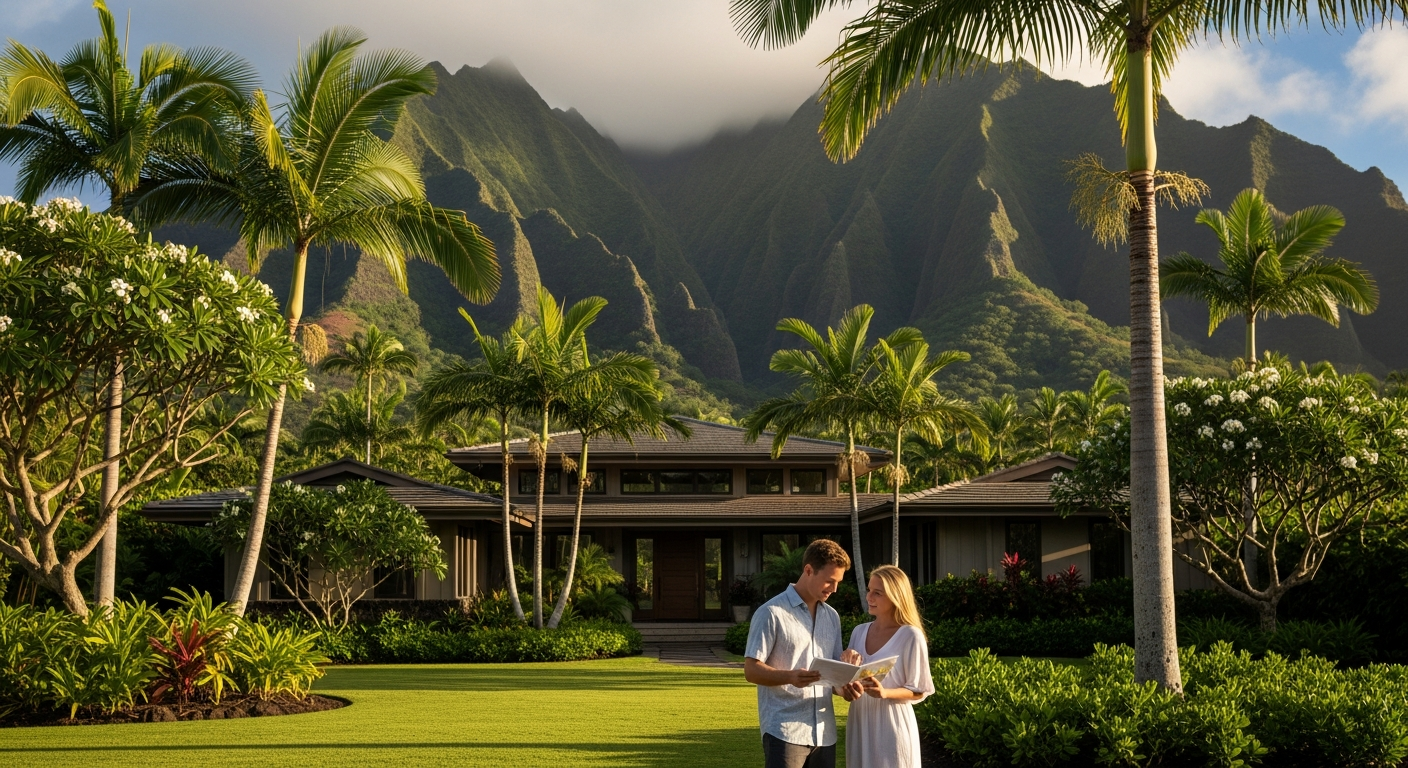
First-time buyers looking at properties on Kauai often calculate their monthly mortgage payment and interest rate, completely overlooking the reality of local hazard policies. On the Garden Isle, securing coverage is not as simple as calling your mainland carrier and transferring an existing policy. Understanding kauai home insurance costs requires looking closely at how local insurers separate wind, water, and fire risks into distinct products.
The Three-Policy Reality in Hawaii
Mainland buyers are accustomed to a single homeowners policy that covers fire, theft, and wind damage. In Hawaii, that standard policy specifically excludes hurricane damage. To be fully protected, you must secure three separate policies: a standard homeowners policy, a hurricane policy, and a flood policy.
The standard policy covers basic fire, liability, and theft. The hurricane policy, typically written through the Hawaii Hurricane Relief Fund or private specialty insurers, covers windstorms and hurricane-force damage. Finally, a flood policy, backed by the National Flood Insurance Program, is necessary to cover rising water, which is a critical distinction given the intensity of tropical storm systems. You can read about how storms and flooding affect island infrastructure to understand why this separation of water and wind coverage is strictly enforced by local lenders.
Estimating Kauai Home Insurance Costs
The actual premium you pay depends heavily on the age of the home, its construction style, and its proximity to the ocean. For a typical single-family home valued between $1.5 million and $2.5 million, standard homeowners insurance might run between $1,500 and $3,000 annually. However, the hurricane premium can easily add another $2,000 to $5,000 per year, depending on the wind zone classification.
When you begin to browse active listings on the islands, you must factor these line items into your monthly carrying costs rather than relying on the automated estimates generated by national real estate portals. These portals regularly omit hurricane and flood premiums, leaving buyers with a significant deficit when their actual loan estimates arrive. These insurance fees are a major component of your closing costs, which we cover in detail in our guide on understanding cash to close in real estate transactions.
The Hurricane Deductible Trap
First-time buyers are often shocked by how hurricane deductibles are structured. Unlike a standard policy where you pay a flat deductible, a hurricane policy deductible is calculated as a percentage of the home’s total replacement value. This percentage typically ranges from 1% to 5%.
If your Kauai home has an insured replacement value of $1 million and you select a 2% hurricane deductible, your out-of-pocket cost before insurance kicks in is $20,000. Opting for a higher percentage deductible will lower your annual premium, but it exposes you to massive financial risk if a storm makes landfall. Lenders require these deductibles to be clearly documented, and they will verify that you have the liquid reserves to cover this deductible before approving your mortgage.
Construction Details That Lower Your Premiums
The physical structure of the home determines your eligibility for premium discounts. Kauai has strict building codes, and homes built after 1994 are generally much cheaper to insure because they require hurricane clips. These metal connectors secure the roof trusses directly to the wall studs, preventing the roof from lifting off in high-wind events.
If you are looking at older homes, particularly those built with single-wall construction, expect your premiums to be significantly higher. Many national insurers will not write policies for single-wall homes at all, forcing you to use local specialty carriers. Retrofitting an older home with hurricane clips and storm shutters can reduce your annual windward premiums, but the upfront cost of these improvements must be weighed against the long-term insurance savings.
How Windward and Leeward Locations Impact Rates
The microclimates of Kauai do more than dictate how much rain falls on your lawn. They also dictate your insurance risk profile. The windward side of the island experiences higher average wind speeds and moisture levels, which can lead to higher baseline premiums for both wind and water damage.
Leeward areas may offer slightly lower windstorm premiums, but they are not exempt from strict underwriting guidelines. Before writing an offer, always request the current seller’s insurance declaration page to see exactly what they are paying. This prevents unexpected budgeting surprises during the escrow process and ensures your debt-to-income ratio remains within the lender’s guidelines.
To ensure you are fully prepared for every expense before writing an offer, we can help you analyze the specific insurance requirements for your target properties. Explore our resources to find your next Hawaii property with complete financial clarity and secure a home that fits your long-term budget.