Hawaii has roughly 88,000 active cesspools discharging millions of gallons of untreated wastewater into the ground every single day. This environmental challenge led to Act 125, which mandates that all cesspools across the islands must be upgraded to septic systems or connected to a sewer line by the year 2050. For anyone purchasing or selling real estate on the islands, the hawaii cesspool conversion law is not a distant concern, it is actively reshaping property values and purchase contract negotiations today.
The Financial Reality of System Upgrades
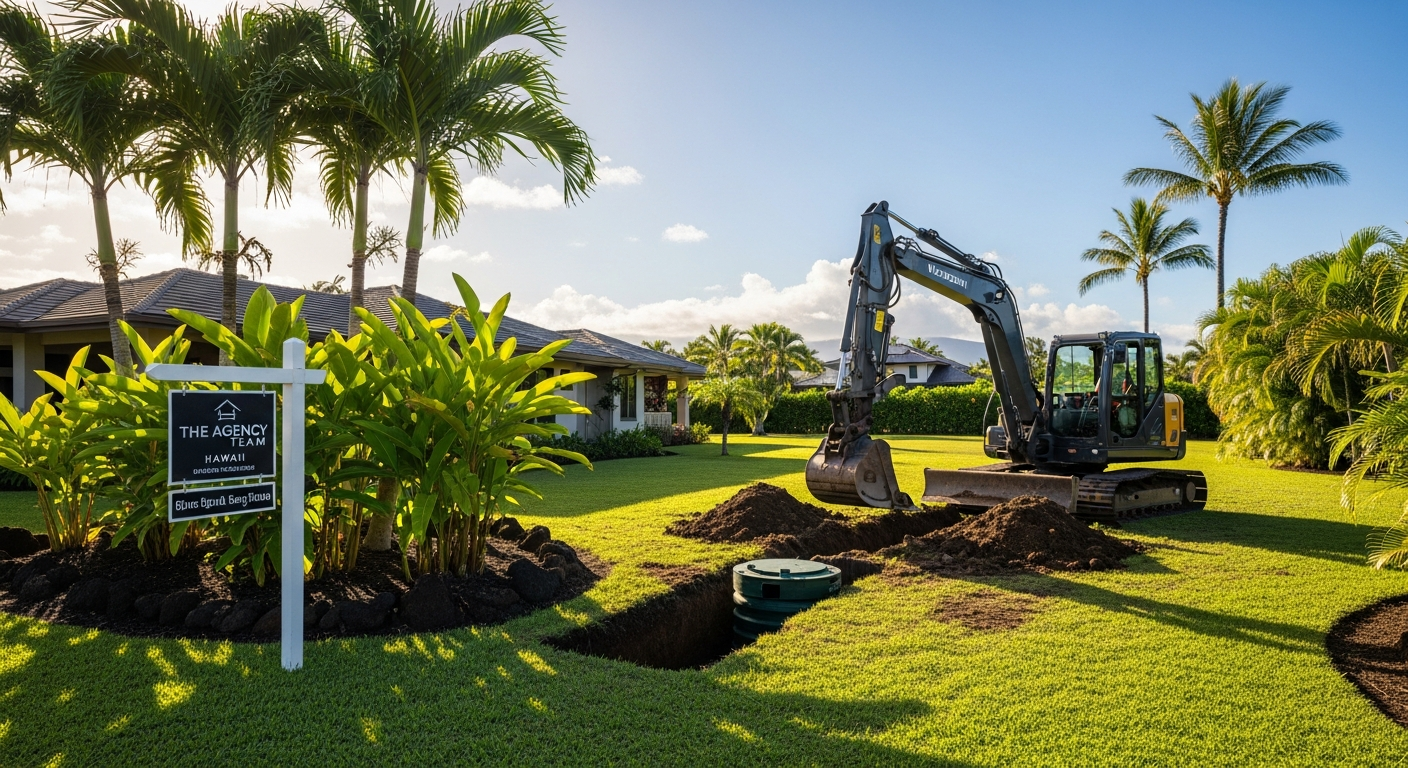
Replacing a cesspool is not as simple as swapping out a tank. The physical geography of the islands makes wastewater excavation a complex engineering task. In areas with dense volcanic basalt, digging a proper septic field requires heavy machinery and jackhammering through solid rock.
A typical conversion from a cesspool to an approved individual wastewater system, such as a septic tank or an aerobic treatment unit, can cost anywhere from $20,000 to well over $50,000. These figures depend heavily on the soil composition, slope, and accessibility of the property. Buyers who ignore these physical constraints often find themselves facing massive unexpected expenses shortly after closing.
This is a critical component of the broader regional focus on infrastructure, which is highlighted in the state’s long-term planning for Hawai’i’s 2026 Vision for housing and community reform.
Why Appraisers and Lenders Are Taking Notice
Lenders and appraisers are increasingly factoring the hawaii cesspool conversion law into their calculations. If a property relies on a cesspool, the looming 2050 deadline represents a mandatory capital expenditure that cannot be avoided.
For buyers using conventional financing, some lenders are already scrutinizing these systems during the underwriting process. If a cesspool is located near a sensitive shoreline or a municipal water source, the state may classify it as a priority upgrade area, pulling the compliance deadline much closer than 2050.
This directly impacts the net value of the home. An appraiser looking at comparable sales might adjust the valuation downward if a neighboring home has already completed its septic conversion while the subject property still uses an active cesspool. If you are preparing to purchase an island home, you need to understand how these infrastructure costs affect your purchasing power. You can review our dedicated buyer resource guide to align your budget with these local environmental requirements before making an offer.
How to Handle Cesspools in Purchase Contracts
In a standard Hawaii real estate transaction, the existence of a cesspool is a major point of negotiation. Buyers are no longer willing to accept the full future liability of a conversion without a corresponding concession from the seller.
There are several ways this plays out during escrow:
-
Direct Price Reductions: Buyers often request a credit or a price reduction equal to the estimated cost of a future septic installation. This requires obtaining a formal engineering estimate during the inspection period.
-
Seller-Funded Upgrades: In some cases, buyers make their offers contingent on the seller completing the conversion before the transfer of title. This ensures the buyer takes ownership of a fully compliant system.
-
Escrow Holdbacks: For transactions where time is of the essence, parties might agree to hold back a portion of the seller’s proceeds in escrow to cover the conversion costs after closing.
Sellers who refuse to negotiate on this point risk watching their properties sit on the market. Overestimating a property’s value while ignoring an outdated wastewater system is a common mistake. In fact, pricing a home without accounting for these immediate physical liabilities often leads to prolonged listing times, similar to the trends discussed in our analysis of why overpricing a home costs sellers more in the long run.
Priority Areas and Shorter Compliance Windows
The 2050 deadline is the absolute outer limit for compliance, but many homeowners will have to convert much sooner. The Hawaii Department of Health has categorized cesspools into Priority 1, 2, and 3 zones based on their risk to public health and the environment.
Priority 1 cesspools, which are located near drinking water sources or sensitive coastal waters, are targeted for accelerated conversion. Homeowners in these zones may be required to upgrade long before 2050.
Additionally, any major home renovation that increases the number of bedrooms or significantly alters the plumbing will trigger an immediate requirement to upgrade the wastewater system. This means you cannot expand a home or build an accessory dwelling unit without first addressing the cesspool. Buyers looking for properties with expansion potential must factor this immediate cost into their initial financial models.com/hawaii-real-estate-market-trends-buyers-market/”>Hawaii real estate market trends to understand current inventory behavior.
Available Incentives and Financial Relief
To ease the financial burden of the hawaii cesspool conversion law, the state and federal governments have introduced several assistance programs. These programs are designed to help middle-and-low-income families manage the transition.
The state has previously offered income tax credits for cesspool upgrades, allowing qualified homeowners to offset a portion of the construction costs. Additionally, grant programs and low-interest loan options through local financial institutions are occasionally available to help fund the engineering and installation phases.
While these programs provide some relief, they rarely cover the entire cost of excavation and installation in challenging terrains. Homeowners must still be prepared to fund a significant portion of the project out of pocket, making the conversion a key factor in any long-term financial plan.
Preparing for Your Next Real Estate Move
The transition away from cesspools is one of the most significant regulatory shifts in Hawaii real estate history. Whether you are buying a home that requires an immediate upgrade or selling a property with an older system, ignoring the financial reality of this mandate will cost you during negotiations.
If you are planning to enter the market soon, having a clear understanding of these local infrastructure mandates is essential to protecting your investment. Explore our buyer search and resource portal to find properties that have already completed these vital upgrades and to secure professional guidance for your search.