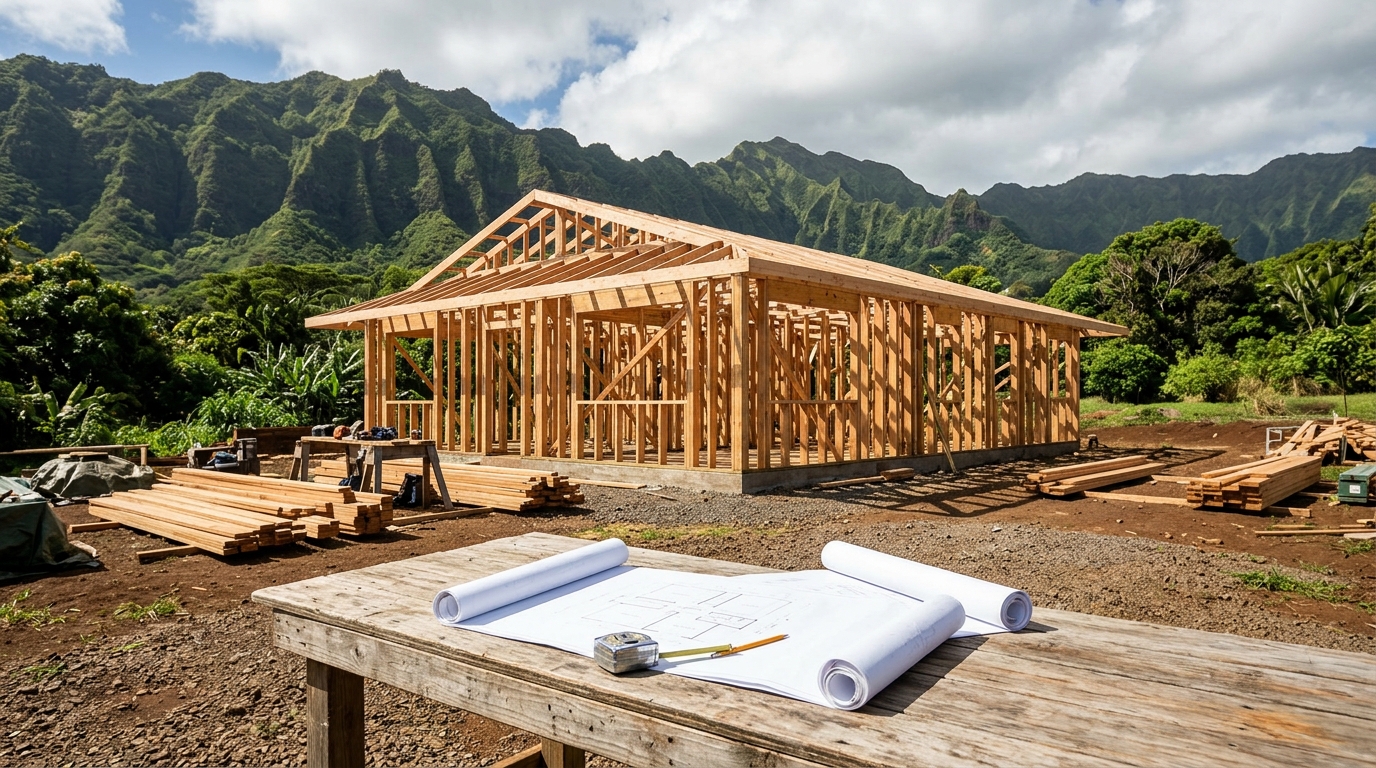
A vacant parcel on Kauai with ocean frontage does not guarantee the right to build a five-thousand-square-foot custom home. Understanding kauai residential zoning rules requires looking past lot acreage directly into county infrastructure caps, water meter availability, and localized building moratoriums. Buyers who purchase raw land assuming building permits follow standard zoning classifications quickly run into strict administrative limits on physical living area.
How Water Meter Restrictions Create De Facto Building Freezes
Building moratoriums on the island rarely announce themselves as outright construction bans. Instead, the County of Kauai Department of Water manages growth by limiting water meter allocations based on source capacity and storage infrastructure. If a district water system operates near peak demand, the county will not issue a new water meter regardless of how the underlying parcel is zoned.
Without an active water service commitment, the planning department cannot approve a residential building permit. Property owners often hold land in agricultural or residential classifications for years while waiting for municipal storage tanks or transmission lines to receive capital upgrades. These infrastructure bottlenecks effectively freeze vacant parcels in place, turning what looked like immediate development opportunities into multi-year holding exercises.
For existing residential structures, water meter size dictates the maximum fixture count allowable inside the home. An owner who intends to double the footprint of an older beach cottage frequently discovers that adding bathrooms or detached living quarters triggers an infrastructure capacity review. If the current water main cannot support the additional fixture units, the county denies the expansion permit outright.
County Development Restrictions on Additional Dwelling Units and Floor Area
Even when water infrastructure supports construction, county development restrictions limit physical density through lot coverage ratios, setback rules, and guest house provisions. The Comprehensive Zoning Ordinance governs how much square footage can cover a site, but recent regulatory updates prioritize local workforce housing availability over luxury estate expansion. These updates cap the size of additional dwelling units and limit accessory buildings across specific zoning districts.
On parcels zoned for agriculture, building a primary residence requires proving active agricultural production rather than simply submitting a residential architectural plan. The county restricts non-agricultural footprint coverage to protect open space and watershed zones. Buyers seeking to establish sprawling estates often find that deed restrictions and open-space easements restrict total impermeable ground cover to a small fraction of the total parcel size.
If you are planning to purchase vacant land or an existing home with expansion potential, you need boots-on-the-ground representation that evaluates infrastructure before you write an offer. Review available inventory through our buyer representation services to ensure prospective properties have verified utility capacity and buildable building rights.
Wastewater Mandates and Custom Build Timelines
Wastewater disposal represents the other primary driver of custom build limits. Kauai features extensive rural acreage that lacks municipal sewer hookups, requiring on-site septic or individualized wastewater treatment systems. The state-level phase-out of legacy cesspools directly influences how architects calculate living space, bedroom numbers, and overall plumbing volume.
Properties undergoing substantial renovation or new construction must install advanced wastewater treatment systems that comply with current environmental protection standards. Understanding how the statewide cesspool conversion requirements affect site planning is critical because septic absorption fields consume significant yard space. In coastal and riverfront areas, high groundwater tables demand expansive leach fields, which reduces the remaining ground area available for the house footprint.
Permitting reviews for on-site wastewater treatment involve both the county planning department and the state Department of Health. This multi-layered administrative process routinely adds six to twelve months to initial development schedules. Factoring these timelines into your holding costs prevents costly carrying surprises while plans sit in agency queues.
Environmental Setbacks, Coastal Restraints, and Holding Costs
Shoreline parcels face additional scrutiny under Kauai’s shoreline setback rules, which base construction boundary lines on historical coastal erosion rates rather than fixed property lines. A coastal lot may visually offer an acre of flat building ground, but the required erosion-hazard buffer can push the buildable footprint back twenty to sixty feet further than standard zoning tables indicate. This dynamic restriction prevents expanding existing oceanfront houses toward the water.
Holding costs during these extended permitting cycles run significantly higher than in less regulated markets. Beyond property taxes and engineering fees, owners must account for specialized insurance obligations during the pre-construction phase. Evaluating Kauai hazard insurance closing costs and budgeting for Kauai hurricane coverage early in your due diligence protects your capital before architectural commitments become irreversible.
What Land Buyers Must Evaluate Before Entering Contract
Protecting capital when acquiring real estate on Kauai requires confirming municipal infrastructure capacity before waiving inspection contingencies. A standard title report will confirm parcel boundaries, but it will not tell you if the local water system is under a meter allocation freeze. Buyers must look deeper into county utility archives and zoning ordinances during their study period.
-
Water Meter Availability: Request written confirmation from the Department of Water regarding the status of the water meter or the exact requirements for a new service connection.
-
Wastewater Feasibility: Commission a site percolation test and engineering review to establish whether the parcel can support a septic system large enough for your desired bedroom count.
-
Shoreline and Slope Setbacks: Commission a certified shoreline survey on oceanfront parcels to calculate the exact erosion-based building setback line.
-
Special Management Area (SMA) Permits: Determine if the parcel falls within the SMA boundary, which adds administrative hearings and environmental reviews to simple building permits.
Kauai real estate presents distinct opportunities, but success depends on recognizing regulatory limits before designing a home that the county will never approve. Work directly with our team through our targeted property acquisition program to evaluate zoning designations, confirm utility access, and secure land with realistic building timelines.