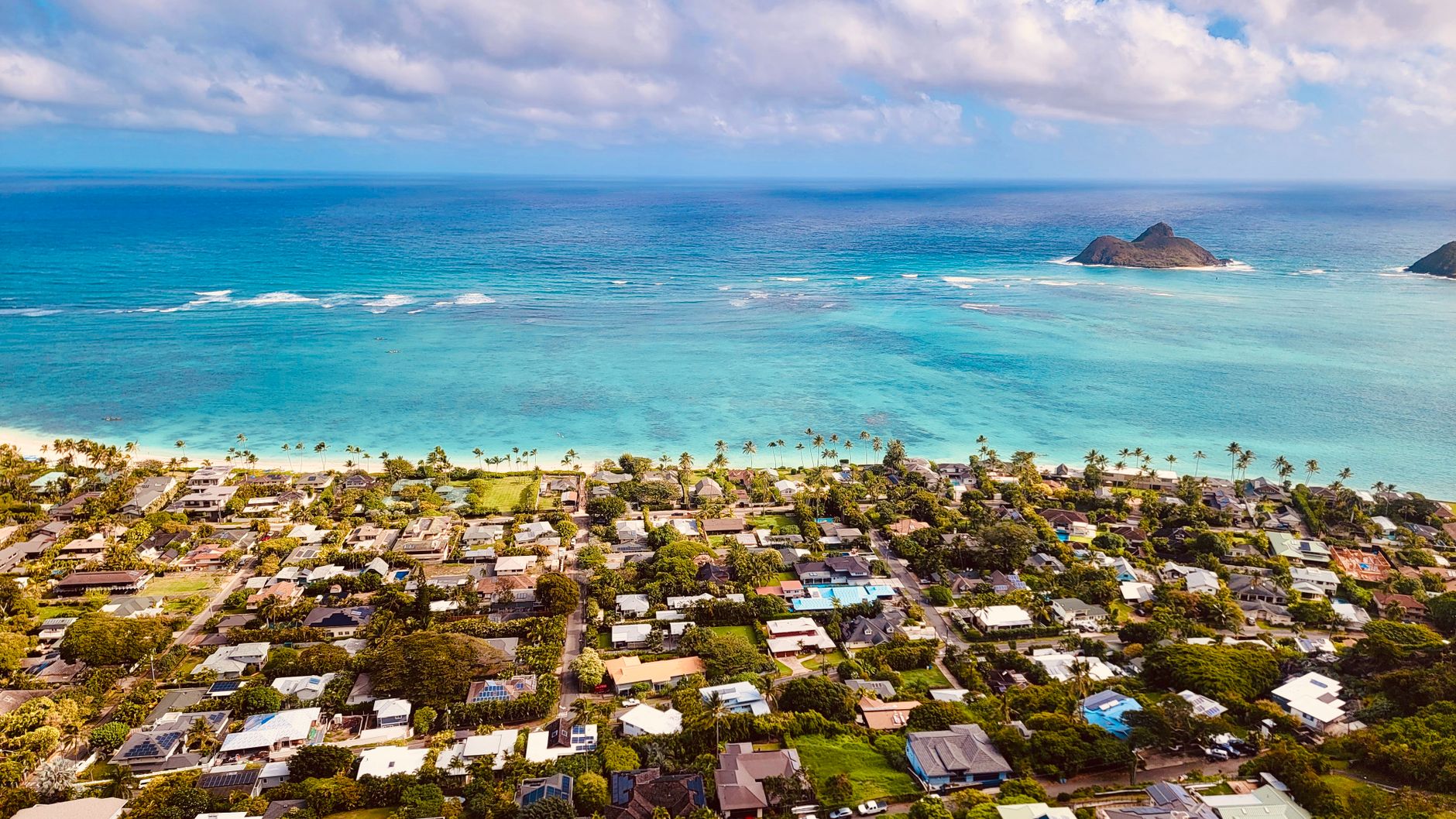
A ten-minute drive on any Hawaiian island can take you from dry, ninety-degree heat at sea level to a cool sixty-eight degrees with steady mist at higher elevations. Understanding Hawaii microclimates is essential before purchasing a property, because whether a home needs round-the-clock central air conditioning or relies entirely on open windows depends almost entirely on its exact geographic pocket.
How Elevation Shifts Daily Temperature Across the Islands
The standard atmospheric lapse rate drops temperatures by roughly three to four degrees Fahrenheit for every one thousand feet of elevation gain. In practical terms, an oceanfront home sitting at sea level experiences intense solar gain and high humidity throughout the day, while a property positioned at twelve hundred feet enjoys natural cooling and crisp night air.
Buyers looking at elevated agricultural parcels on the slopes often find that they rarely turn on an air conditioning unit. In contrast, low-elevation coastal parcels absorb heat through roofs and large window spans all day, creating thermal mass that retains warmth well into the evening hours.
If you purchase a home above fifteen hundred feet, evening temperatures frequently drop low enough that you may want a fireplace rather than cooling equipment. Lower down the slope, failing to account for heat accumulation leads to constant climate control usage and substantial monthly operational expenses.
Trade Winds and the Windward Versus Leeward Dynamic
Northeast trade winds deliver consistent airflow across the windward sides of the islands, cooling interior living areas naturally whenever windows are aligned properly. When these moisture-rich winds hit high volcanic peaks, they rise, cool, and drop their moisture as rain before descending down the opposite slopes as dry, warm air.
This natural pattern creates a clear contrast between living on the leeward coast versus the windward side of an island. Leeward coastal communities receive significantly less rainfall and substantially more annual sunshine, resulting in higher ambient daytime temperatures and little natural wind shelter.
When searching for properties across different island zones, working with an experienced team helps you target homes that match your exact climate preferences before making an offer. Homes built in calm leeward pockets without strong trade wind exposure require mechanical cooling to stay comfortable, especially during late summer months when trade winds occasionally stall.
The Financial Impact on Electricity and Utility Costs
Electricity rates across the islands rank among the highest in the country, making mechanical cooling a direct factor in your ongoing property operating budget. Running multiple central air conditioning zones throughout a four-thousand-square-foot coastal home can easily generate electric bills exceeding fifteen hundred dollars per month during peak summer weather.
Many homeowners offset these costs by installing residential solar energy systems paired with battery storage. However, older homes in coastal pockets that lack modern insulation, radiant roof barriers, or solar panels can quickly surprise new owners with their baseline operating expenses.
Microclimate Zone Typical Elevation Average Airflow Air Conditioning Need Leeward Coast 0 to 400 feet Low to Moderate Essential for daily comfort Windward Coast 0 to 600 feet High (Trade Winds) Optional, used on humid days Mid-Slope Foothills 600 to 1,500 feet Moderate Rarely required in living areas Upcountry / Mountain 1,500+ feet Steady / Cool Unnecessary; heating often preferred
Architectural Design and Cross-Ventilation Mechanics
Local architectural design plays a massive role in whether a specific home demands mechanical cooling. Traditional plantation-style homes and modern Pacific contemporary residences incorporate wide roof overhangs, jalousie windows, high vaulted ceilings, and large pocket sliding doors to funnel breezes through the core living areas.
When a home is oriented perpendicular to incoming trade winds, air moves freely through the structure, pushing warm air up and out through ceiling vents. When a home is built without cross-ventilation in mind, heat becomes trapped in interior hallways and bedrooms regardless of the external weather.
-
Deep lanais and overhangs: Block direct solar radiation from striking glass windows during the hottest midday hours.
-
Pocket sliding doors: Create unobstructed wall openings that maximize passive air movement across open floor plans.
-
Zoned split systems: Provide efficient, targeted cooling for primary suites during humid nights without cooling unused guest rooms.
Evaluating Microclimates Before Submitting an Offer
Never assume that two houses separated by three miles share the same temperature profile, wind exposure, or humidity levels. Visiting a property at different times of day allows you to evaluate afternoon sun exposure, check whether trade winds reach the building site, and review existing HVAC equipment.
Review the age of any existing split or central air systems, ask for recent utility bills, and look closely at the roof orientation for solar potential. Factoring these environmental and structural details into your search ensures that your investment provides comfort year-round without unexpected utility expenses.
When you are ready to explore properties that fit your preferred lifestyle and regional climate, work with our team to buy your next home with complete boots-on-the-ground clarity.