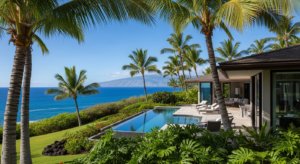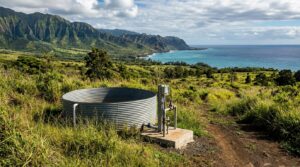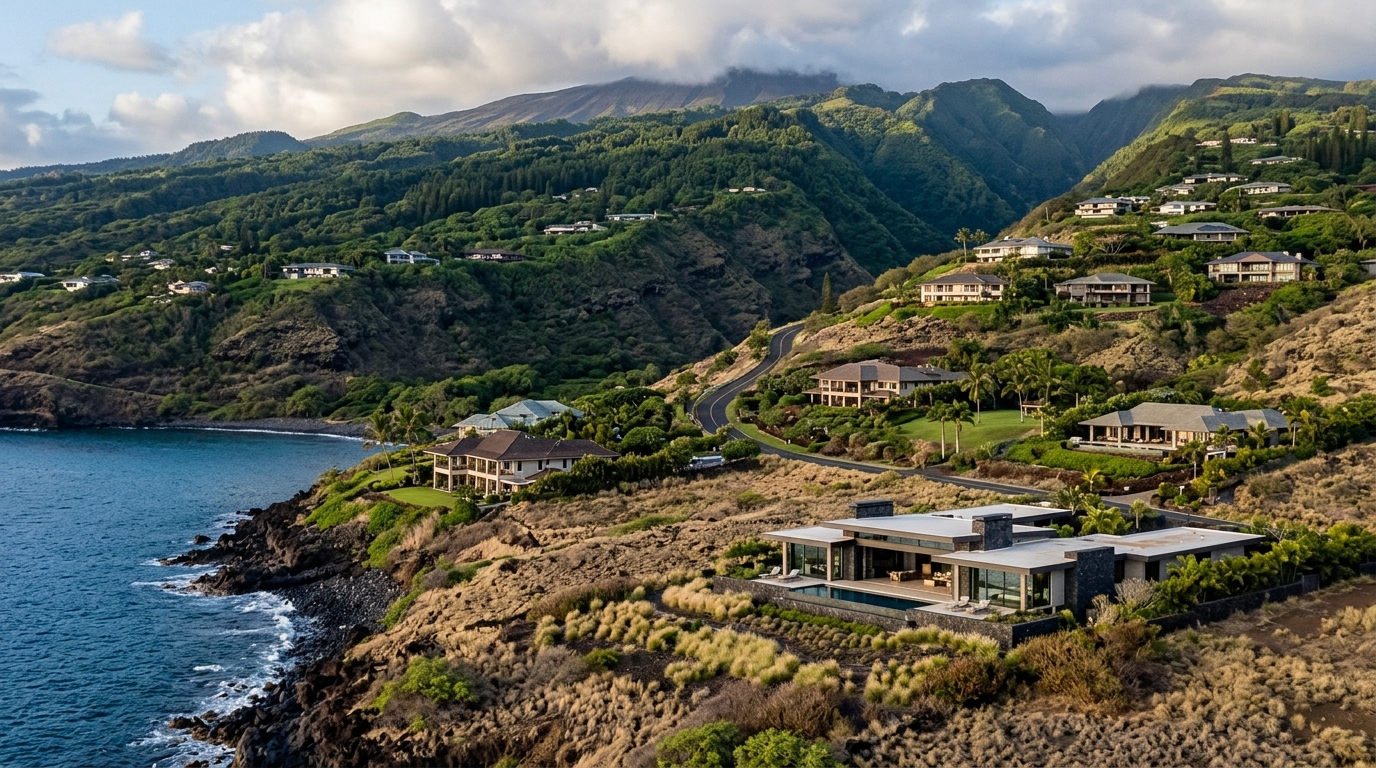
A home sitting at sea level in Kihei experiences an entirely different thermal profile than an estate perched at 2,200 feet in Kula. The physical mass of Haleakala forces incoming trade winds upward, dropping moisture on the windward slopes and leaving the leeward coastline under a persistent rain shadow that absorbs intense solar radiation daily. Factoring in leeward coast versus windward weather patterns, understanding maui elevation microclimate costs is the difference between paying two hundred dollars or twelve hundred dollars a month to maintain a comfortable indoor temperature.
The Physics of Rain Shadow Heating and Thermal Mass
The leeward plains and coastline sit directly in the rain shadow created by Haleakala and the West Maui Mountains. As northeast trade winds push against the mountain peaks, the air cools, condenses, and dumps rain on the windward side. Once that air crests the summit and descends toward the leeward shores, it compresses and warms, creating clear skies with minimal cloud cover.
This weather dynamic produces over 280 cloudless days each year along South Maui shores. Without cloud cover or persistent rainfall to cool ground surfaces, asphalt, concrete foundations, and dark roof systems absorb heat continuously from 9:00 AM until sunset. That thermal energy radiates back into the interior living spaces long after dark, forcing air conditioning compressors to run through the midnight hours.
Properties built at higher elevations avoid this cycle altogether. For every one thousand feet of elevation gained, the ambient temperature drops roughly 3.5 degrees Fahrenheit due to the environmental lapse rate. A residence at 2,500 feet in Upcountry enjoys midday temperatures that are eight to ten degrees cooler than the beach, paired with evening temperatures that drop into the mid-fifties during winter months.
Ridge Cooling Against Coastal Leeward Heat Absorption
Coastal homes in Makena and Kihei rely on constant mechanical cooling to combat ambient humidity and trapped coastal heat. When relative humidity hovers above seventy percent, opening pocket doors does not provide thermal relief. The interior finishes, particularly natural stone flooring and dense drywall, absorb that moisture and ambient warmth, requiring multi-zone HVAC systems to run continuously.
High-elevation parcels along the slopes of Haleakala benefit from mountain breezes and nocturnal katabatic winds. As the mountain surface cools after twilight, cold air drains down the slope toward the ocean, flushing heat out of interior rooms naturally. Homes designed with high transoms and deep overhangs at these elevations rarely require active daytime cooling, cutting baseline energy demand to fractional levels compared to coastal counterparts.
If you are planning to buy a luxury home on Maui across these distinct microclimates, calculating mechanical cooling demands ahead of time is critical to understanding your true monthly operating budget. A four-bedroom coastal build routinely requires fifteen to twenty tons of cooling capacity, whereas an identical square-foot footprint in Makawao or Pukalani operates comfortably with ductless split units used only during humid September conditions.
Calculating Maui Elevation Microclimate Costs Across Elevation Bands
Electricity rates across the island remain among the highest in the country, routinely exceeding forty cents per kilowatt-hour. Because utility expenses tie directly to baseline cooling hours, your property’s elevation dictates your monthly operating liability before you even move in.
To see how topography changes utility liabilities, compare typical cooling and solar expenses across three distinct elevation zones:
-
Sea Level to 300 Feet (South and West Shore): Ambient daytime highs regularly sit between 86 and 91 degrees Fahrenheit. Expect uninterrupted HVAC operation ten to twelve months per year, resulting in baseline monthly electric bills between $900 and $1,600 without extensive solar offset.
-
1,000 to 1,800 Feet (Lower Upcountry / Mid-Slopes): Daytime highs average 78 to 82 degrees with crisp evening wind shifts. HVAC systems run during late afternoon peaks during summer months, producing monthly energy costs between $400 and $700.
-
2,000 to 3,500 Feet (Upper Upcountry / Ridge Enclaves): Daytime highs sit in the low to mid-seventies, dropping to 55 to 62 degrees at night. Air conditioning is rarely installed or used, lowering monthly cooling costs close to zero, though occasional heating is required in January and February.
As detailed in our analysis of how microclimates impact air conditioning costs, cooling an unshaded estate near the beach requires significant energy generation. The physical environment acts as either your cooling ally or your largest recurring expense.
Solar Overhead and Battery Storage Limitations by Zone
Installing a photovoltaic system seems like an automatic solution for high energy bills, but solar production efficiency varies dramatically by elevation and location. Photovoltaic panels lose roughly 0.4 percent of their operational efficiency for every degree Celsius rise above 77 degrees Fahrenheit. In blistering sea-level zones, panel surface temperatures regularly exceed 140 degrees, dragging down daily generation capacity precisely when air conditioning draws peak power.
Leeward coastal roofs generate abundant raw solar hours due to lack of rain, making large multi-string inverters and battery banks a necessity to store power for overnight cooling loads. However, recent regulatory changes outlined in our breakdown of Hawaii residential solar incentives and grid programs mean export credits to the electrical grid are limited. Coastal owners must size battery banks large enough to capture midday production surplus for nighttime use, adding fifty to eighty thousand dollars in upfront mechanical capital.
Higher on the mountain, solar installations face a different constraint. While panels run cooler and maintain peak cell efficiency, afternoon cloud buildup, often referred to locally as the mountain cloud bank, rolls across the slopes around 1:00 PM. This cloud layer cuts direct solar irradiance by forty to sixty percent through late afternoon, limiting total generation windows even though overall household power demand remains low.
Architectural Adjustments for Microclimate Realities
Designing or renovating a home requires building specifically for the parcel’s elevation band. Down along the coast, building envelopes need low-emissivity insulated glass, commercial-grade window tinting, radiant heat barriers in attic spaces, and shaded lanai overhangs extending at least twelve feet from the exterior wall line. Without these defensive details, direct solar gain overwhelms even modern variable-refrigerant HVAC units.
At two thousand feet and above, architectural priorities invert. Homes require morning solar exposure to warm stone floors and great rooms naturally after cool nights. High-efficiency insulation in exterior walls becomes essential to retain warmth once the sun dips behind the mountain, and builders routinely install enclosed indoor-outdoor hearths rather than motorized exterior sunshades.
Before purchasing real estate on the island, walk the property at both 1:00 PM and 8:00 PM to observe wind directions, cloud cover, and radiant heat retention. The microclimate created by elevation and topography will dictate your day-to-day comfort, your monthly bills, and the mechanical infrastructure your estate requires. When you are ready to evaluate properties based on localized climate data and long-term operating costs, connect with our team to buy a luxury home on Maui suited to your exact lifestyle and performance standards.